

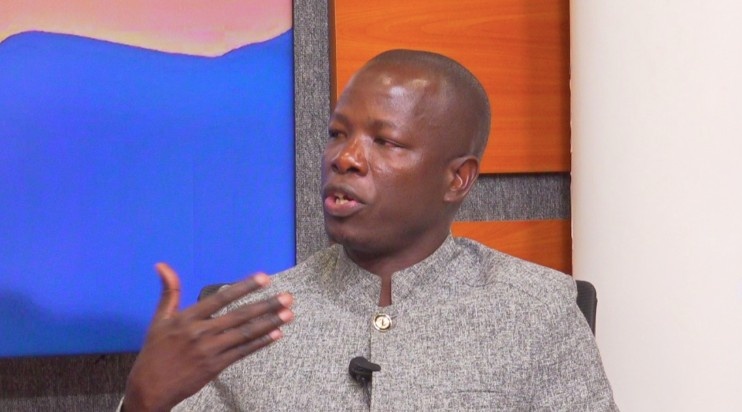
The Uganda Law Society (ULS) has demanded the unconditional release of senior journalist Arnold Anthony Mukose, following reports of his abduction shortly after hosting a radio programme on Metro FM 90 that addressed the recent Constitutional Court judgement on the Computer Misuse (Amendment) Act.
In a statement dated Monday, March, 30, 2026, and signed by ULS President Isaac Ssemakadde, ULS condemned Mukose’s disappearance and called for an end to political persecution and harassment of journalists.
Mukose, co‑founder and programmes director of Alternative Digitalk Media, is also the third petitioner in Constitutional Petition No. 34 of 2022: Alternative Digitalk Media & 11 others v Attorney General, a landmark case that challenged key provisions of the Computer Misuse (Amendment) Act.
In his professional career, Mukose has been a leading voice on press freedom and media safety in Uganda, including his tenure on the Uganda Journalists Association Cabinet (2018–2020), where he served as secretary for human rights and media safety.
According to the ULS, Mukose was reportedly taken soon after participating in a radio discussion about the Constitutional Court’s recent ruling that struck down several controversial provisions of the Computer Misuse (Amendment) Act as unconstitutional.
The society described the incident as part of a “culture of fear and intimidation” being directed at journalists.
“A court judgement is not a private matter. It is a public pronouncement of the law, delivered in the name of the people. Every citizen, journalist, lawyer, academic, and civil society actor has the right to analyse, debate, question, and disseminate its implications. Discussing a court decision is not a crime,” the statement read.
The ULS emphasised its solidarity with journalists across the country, reiterating that “your voices matter, your work matters", and urging an immediate end to enforced disappearances, harassment, and political persecution of media practitioners.
The organisation further announced its readiness to provide legal support and representation to Mr Mukose and his family and stated it would pursue all appropriate legal and institutional avenues to protect his constitutional rights.
In its appeal, ULS called on international and regional human rights bodies — including the Committee to Protect Journalists, Amnesty International, Human Rights Watch, the Uganda Human Rights Commission, and UNESCO — to urgently focus attention on the current situation facing journalists in Uganda. The organisation warned that incidents of journalist abductions are resurfacing and that threats to media freedom persist even beyond the recent election period.
The statement comes in the wake of a significant Constitutional Court ruling that nullified several key sections of the Computer Misuse (Amendment) Act.
In a unanimous decision delivered by a five‑justice panel led by Justice Irene Mulyagonja, the court found that Sections 11, 23, 26, 27, 28, and 29 of the Act, alongside Section 162 of the Penal Code Act, violated fundamental constitutional rights, including the rights to freedom of expression and access to information.
The court held that provisions criminalising communication deemed to ridicule, demean, or promote hostility — as well as those targeting anonymous and unsolicited content — were overly broad, vague, and open to abuse. These sections had been widely criticised for giving authorities sweeping powers to arrest and prosecute Ugandans — especially journalists, activists, and young people — on charges such as offensive communication and malicious information.
Petitioners in the case, which included media rights groups such as Unwanted Witness Uganda, the African Centre for Media Excellence, and the Editors’ Guild, argued that the impugned provisions undermined constitutional guarantees protected under Articles 29 and 41 of the Uganda Constitution. Attorney General Kiryowa Kiwanuka had defended the law by asserting it was necessary to curb harmful online conduct like hate speech and malicious information; however, the court concluded that the restrictions far exceeded permissible constitutional limits.
In addition to substantive concerns, the court identified procedural flaws in the enactment of the amendments. Evidence from the parliamentary Hansard of 8 September 2022, along with affidavits from the Clerk to Parliament, showed that the amendments were passed without verifying that a quorum was present — a violation of Parliament’s own rules and constitutional requirements.
In a concurring opinion, Justice Ketra Kitariisibwa Katunguka also ruled that the criminal libel provisions under Section 162 of the Penal Code Act were inconsistent with Uganda’s constitutional principles and international human rights obligations. The court issued a permanent injunction restraining enforcement of the impugned provisions and ordered the state to pay 30 percent of the petitioners’ legal costs.
In a March 25 statement, ULS also condemned the continued detention of prominent city lawyer Hassan Male Mabirizi and other content creators under Sections 26 and 28 of the Act, calling the actions “tantamount to indiscipline".
ULS accused the magistrate of acting under undue influence and undermining the rule of law and urged the Chief Registrar and Principal Judge to release Mabirizi, discipline the magistrate, and ensure compliance with the court ruling.
